

 Post by
 1.Definition & Core Powder Characteristics
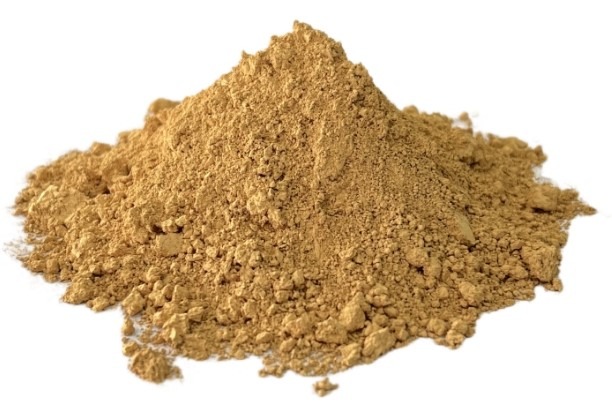
Rutile powder is a fine-grained titanium dioxide (TiO₂) material processed from natural rutile, calcined rutile, or synthetic rutile via crushing, grinding, and classification. With a typical particle size ranging from 0.1 μm to 100 μm, it retains the inherent crystalline structure and chemical inertness of rutile while possessing enhanced powder properties—such as large specific surface area, excellent dispersibility, and uniform particle size distribution. Unlike bulk rutile, its powdery form enables seamless integration with matrices like coatings, plastics, and ceramics, making it a versatile raw material in high-performance material manufacturing.
2. Processing Technology & Particle Size Control
The production of rutile powder adheres to precision processing workflows to ensure consistent powder quality. Raw rutile materials (natural, calcined, or synthetic) are first crushed into coarse particles, then subjected to ultra-fine grinding using equipment like jet mills or ball mills. The grinding process is assisted by dispersants to prevent particle agglomeration. Subsequent classification—via air classifiers or sieving—segregates powders into different particle size grades, with strict quality control to ensure the target particle size distribution (PSD) meets industrial specifications. Post-processing steps such as drying and impurity removal further optimize purity and dispersibility, eliminating moisture and trace contaminants.
3. Physicochemical Properties of Rutile Powder
Rutile powder combines the stable physicochemical traits of rutile with powder-specific advantages. Chemically, it has high TiO₂ purity , strong resistance to acids, alkalis, and thermal decomposition, and no reactivity with most organic or inorganic substances. Physically, it exhibits a Mohs hardness of 6.5–7.0, high refractive index, and good whiteness. Its fine particle size endows it with superior covering power and tinting strength, while low oil absorption and good flowability ensure easy blending with other materials in industrial production.
4. Grade Classification & Technical Specifications
Rutile powder is classified based on particle size, TiO₂ purity, and application scenarios, with standardized technical parameters to match diverse downstream needs. Three mainstream grades are widely used in industry:
- Ultra-Fine Grade: Particle size 0.1–5 μm, TiO₂ ≥97%, low impurity content, suitable for high-end coatings, optical materials, and electronic components.
- Industrial Grade: Particle size 5–50 μm, TiO₂ 92–96%, cost-effective, applied in plastics, rubber, ceramic glazes, and welding fluxes.
- Coarse Powder Grade: Particle size 50–100 μm, TiO₂ ≥92%, used in refractory materials, abrasive additives, and construction materials.
Customized particle size and purity adjustments are available to fit specific production formulas.
5. Key Industrial Applications
The powdery form and excellent performance of rutile powder make it indispensable in multiple industries, with its properties directly enhancing end-product quality:
- Coatings & Paints: Acts as a white pigment and UV stabilizer, improving covering power, weather resistance, and durability of architectural and industrial coatings.
- Plastics & Rubber: Enhances mechanical strength, heat resistance, and opacity of plastic products (e.g., films, pipes) and rubber components.
- Ceramics & Glass: Serves as a flux and opacifier in ceramic glazes, and as a refractive additive in specialty glass, improving surface finish and thermal stability.
- Advanced Materials: Used in electronic ceramics, photovoltaic cell coatings, and catalyst supports, leveraging its high specific surface area and chemical stability.
6. Performance Advantages & Application Value
Rutile powder outperforms other TiO₂ powders with three core strengths: higher refractive index and covering power, superior weather resistance and thermal stability, and flexible particle size customization. Its powdery form ensures easy dispersion and compatibility with various matrices, reducing processing costs for downstream manufacturers. Aligned with green production trends, high-quality rutile powder enables low-VOC coatings and lightweight plastic products, contributing to energy conservation and environmental protection. As a key raw material for advanced manufacturing, it supports the upgrade of industries towards high-performance and sustainability.