
 Post by
 1. Definition & Core Material Traits
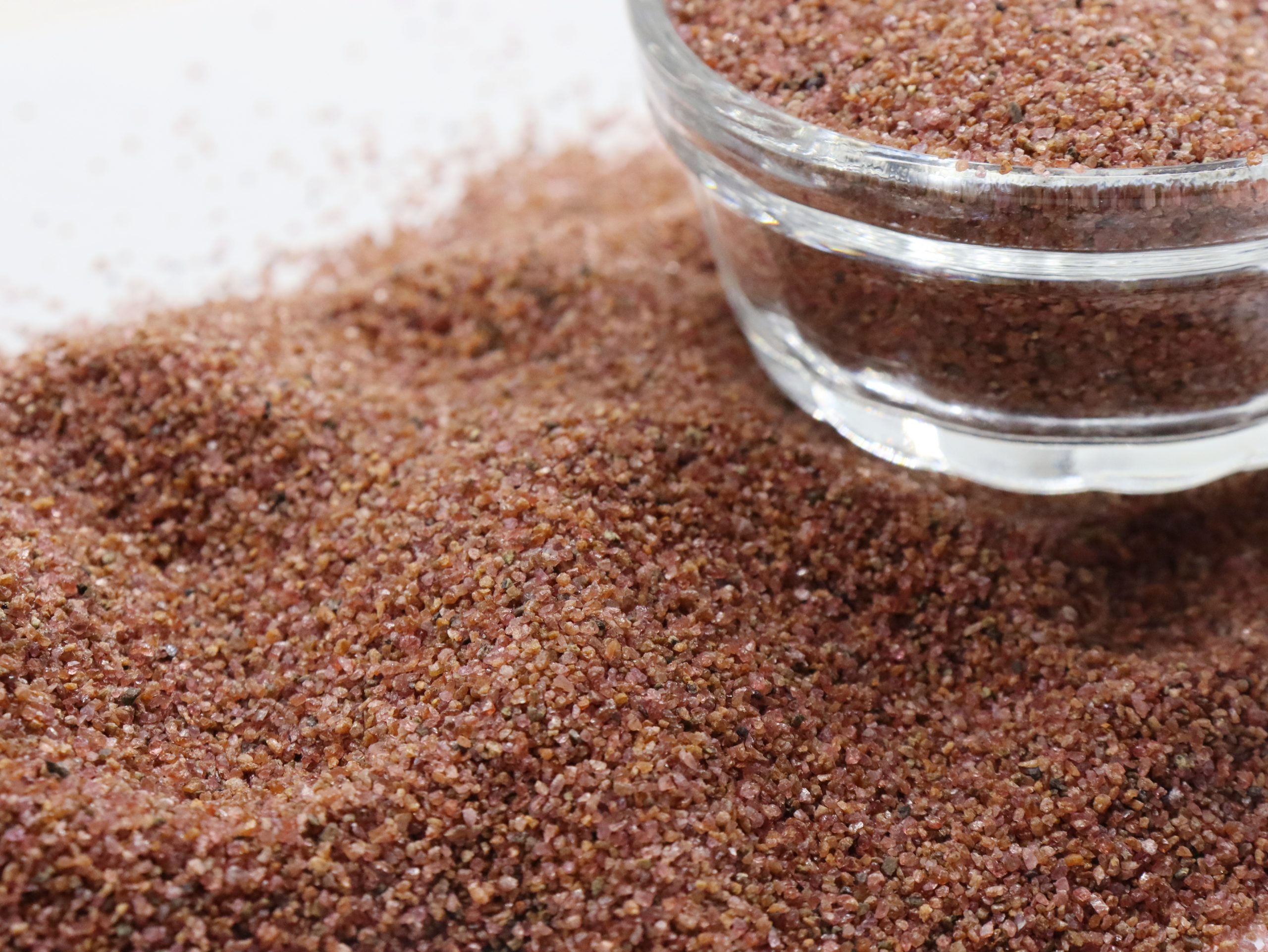
Garnet sand is a naturally occurring group of silicate minerals belonging to the nesosilicate class, with a general chemical formula of X₃Y₂(SiO₄)₃—where X represents divalent cations and Y denotes trivalent cations. It is a hard, angular mineral aggregate, primarily composed of garnet species like almandine, pyrope, and grossular. Unlike synthetic abrasives, garnet sand boasts inherent durability, sharp edges, and chemical inertness, making it a cost-effective and eco-friendly choice for abrasive applications. Its natural granular structure ensures consistent performance, while its non-toxicity and recyclability further enhance its industrial value.
2. Geological Origin & Global Distribution
Garnet sand forms in diverse geological settings, predominantly in metamorphic rocks and occasionally in igneous rocks. It crystallizes under high-temperature and high-pressure conditions, often coexisting with minerals like quartz, feldspar, and mica. Most commercially exploitable garnet sand deposits are placer deposits—formed by the erosion, transportation, and sedimentation of primary garnet-bearing rocks—where its high density allows it to accumulate in coastal sands and riverbeds. Major global producers include India, Australia, South Africa, the United States, and Brazil, with India and Australia accounting for over 70% of global garnet sand supply.
3. Physical & Chemical Properties
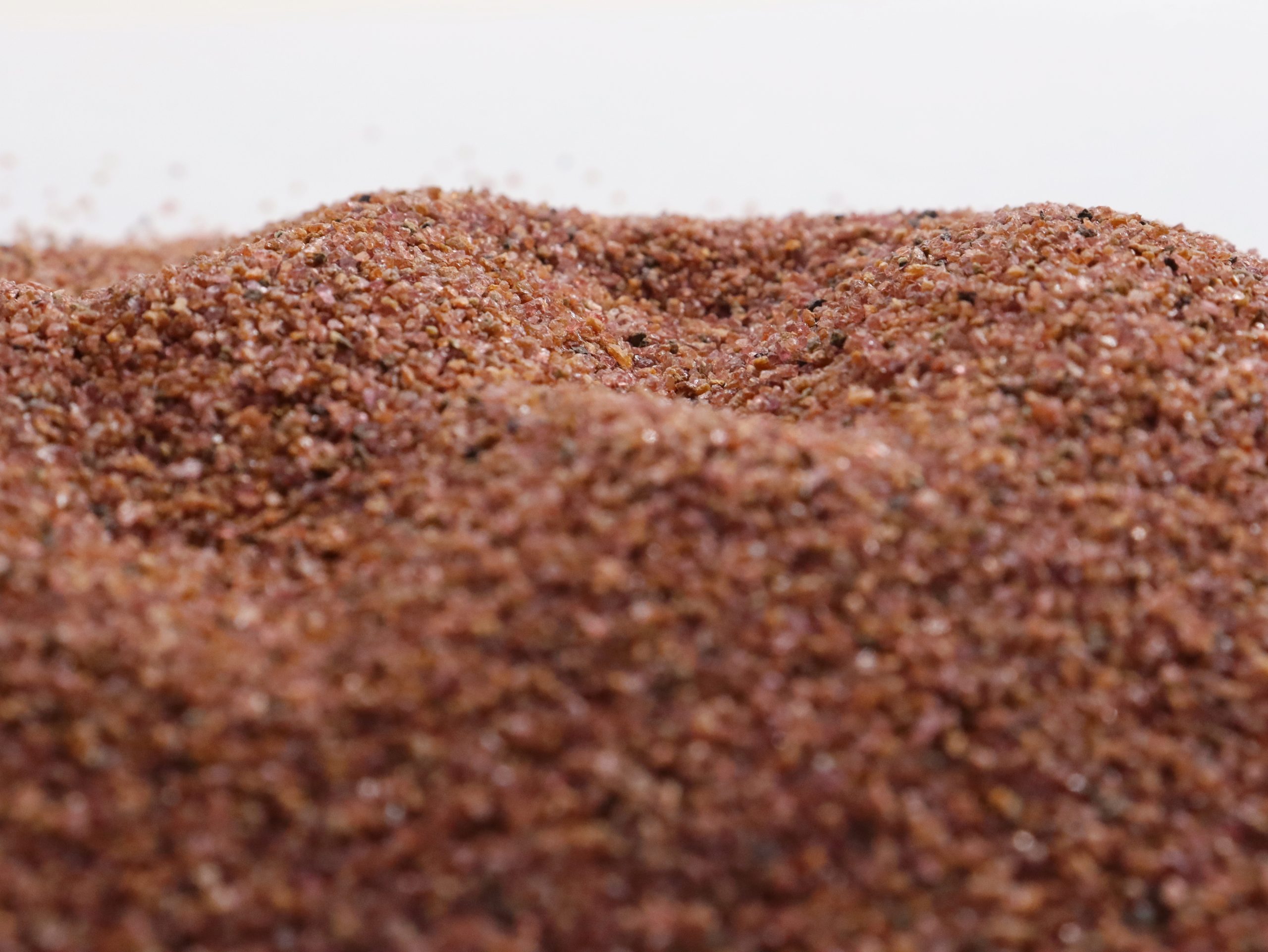
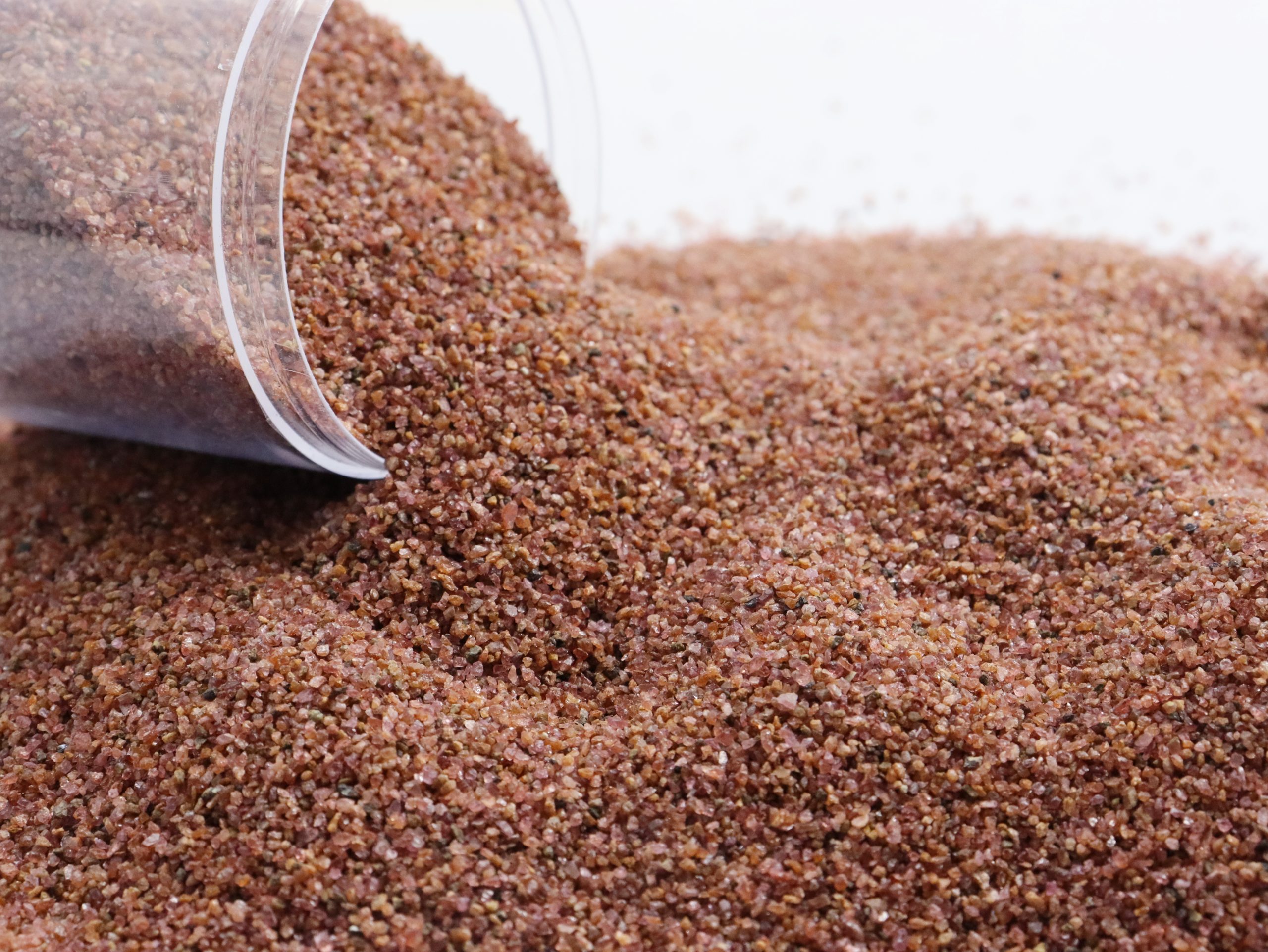
Garnet sand exhibits exceptional physicochemical properties tailored for abrasive and industrial use. Physically, it appears as red, brown, green, or black granular particles with a vitreous to resinous luster, a Mohs hardness of 7–7.5, and sharp, angular edges that enhance abrasive efficiency. It has a high melting point and good thermal stability. Chemically, it is highly inert, resistant to most acids and alkalis, and non-reactive with metals and organic materials. Its low dust generation and non-toxic nature make it safer than alternative abrasives like silica sand.
4. Grade Classification & Technical Specifications
Garnet sand is classified based on garnet species, particle size, purity, and application scenarios, with standardized specifications to meet diverse industrial needs. Three mainstream grades are widely adopted:
- High-Purity Abrasive Grade: Almandine-dominant, particle size 0.1–50 μm, low impurity content, suitable for precision polishing, waterjet cutting, and electronic component cleaning.
- Industrial Sandblasting Grade: Mixed garnet species, particle size 50–500 μm, cost-effective, used for surface preparation, rust removal, and coating stripping.
- Filtration Grade: Controlled particle size, high permeability, for water treatment, oil well drilling, and industrial filtration systems.
Customized particle size grading and purification services are available to match specific production line requirements.
5. Key Industrial Applications
The unique abrasive and physical properties of garnet sand make it indispensable across multiple industrial sectors:
- Abrasive & Blasting: The largest application—used for sandblasting, waterjet cutting, and abrasive blasting to prepare surfaces for painting, coating, or welding, ensuring strong adhesion without damaging substrates.
- Polishing & Grinding: As a fine abrasive in polishing compounds for metal, glass, stone, and ceramics, delivering a smooth, high-gloss finish.
- Water Treatment & Filtration: Serves as a filter media in municipal water treatment, swimming pools, and oil refineries, effectively removing impurities due to its high permeability and durability.
- Refractory & Construction: Mixed into refractory linings and concrete aggregates to enhance hardness, wear resistance, and thermal stability.
6. Performance Advantages & Sustainable Value
Garnet sand outperforms synthetic and alternative natural abrasives with four core strengths: durable angular structure, chemical inertness, recyclability, and eco-friendliness. Compared to silica sand, it eliminates silicosis risks, improving workplace safety. Aligned with green industrial trends, its natural origin and recyclability reduce environmental impact, while its cost-effectiveness and wide availability support sustainable production. As demand for safe, efficient abrasives grows in manufacturing and infrastructure sectors, garnet sand remains a pivotal material for high-performance, eco-conscious processes.